10 FUN FACTS ABOUT THE AMALFI COAST YOU MIGHT NOT KNOW
The Amalfi Coast is one of the most famous Italian landscapes in the world. Behind the iconic images, however, lie many stories and interesting facts that often escape the notice of first-time visitors. Here are a few anecdotes that will help you get to know the Amalfi Coast from a different perspective!
by R. Cascone
The houses perched high above Positano, the steps leading up to Amalfi’s cathedral, the breathtaking views, and the postcard-perfect blue sea are all elements of the Amalfi Coast that have become part of the collective imagination. But there’s so much more to it than that! If you’re a traveler who’s also interested in the lesser-known aspects of a place, keep reading: here you’ll discover some interesting facts about the Amalfi Coast that will reveal an unusual side of one of Italy’s most distinctive and famous regions.
share this article
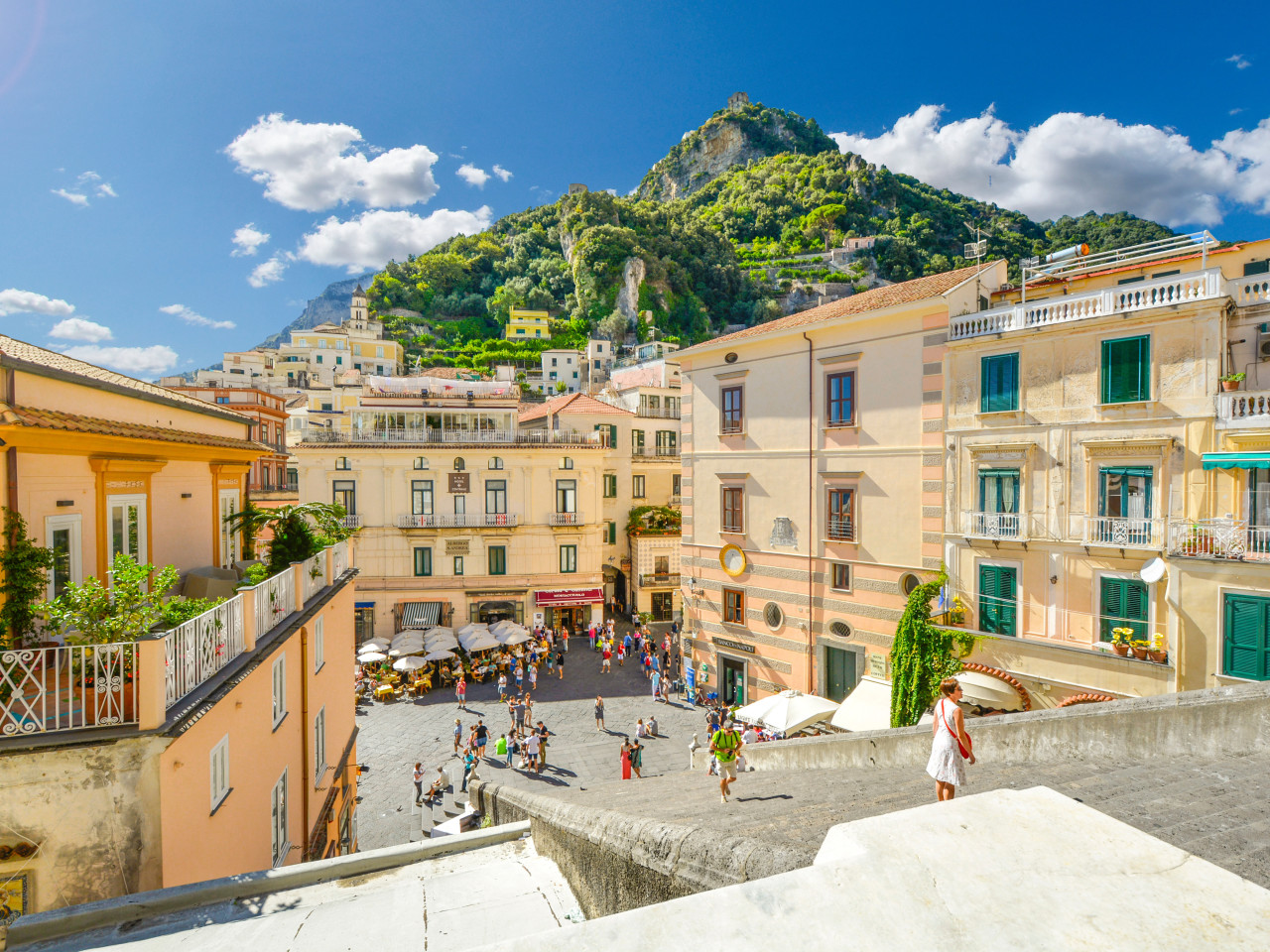
Amalfi Cathedral
1. The Amalfi Coast in a vast stretch of... terraces
We’ve talked about this feature of the coastal landscape many times—it’s one of the region’s most distinctive characteristics: I’m talking about the terraced fields! Because the coast is so steep and rugged, for centuries the locals have reshaped the land by building thousands of terraces supported by dry-stone walls, primarily to grow olive trees, grapevines, and lemon trees. Here I told you how the ingenuity of the Costiera’s inhabitants was a key factor in the area being designated a UNESCO “World Heritage Site”: the landscape that is now famous throughout the world is thus the result of an enormous human effort that continues from generation to generation. While the terraces certainly serve an agricultural purpose, they have also contributed to making the Amalfi Coast unique.

2. Stairs, stairs, stairs!
Any article offering travel tips on the Amalfi Coast says it right away: get ready to climb hundreds of steps! Why?? Well, as I just mentioned, the coastal area is characterized by steep slopes: it’s only natural, then, that the villages were built on the rocky cliffs below, which has given rise to some of Italy’s most iconic landscapes! The villages therefore extend vertically, and the stairs are essential for getting from one part of town to another. Historically, they’ve been one of the main ways to connect homes, farmland, and the sea. That’s precisely why, sometimes, a distance that appears very short on online maps actually hides unexpected stretches of stairways that can leave you breathless: keep this in mind when booking your accommodation!
3. The lemon: an icon of the Amalfi Coast
Earlier, when discussing the most widely grown crops on the Amalfi Coast, I mentioned the wonderfully fragrant lemons! But these are much more than just a typical local agricultural product: the lemon—or “Sfusato Amalfitano”—is a true icon of the Amalfi Coast throughout the world! Why is that? The lemon has a very long history here: during the era of the Amalfi Republic, in fact, when the city’s maritime trade reached its peak, citrus fruits were in high demand aboard ships to combat scurvy, a disease caused by a lack of vitamin C. With such high demand, lemon groves began to be planted in large numbers on the coastal terraces. Production was abundant, thanks in part to the area’s favorable growing conditions—with warm southerly winds and the protection of the Lattari Mountains behind them. As a result, lemon groves spread like wildfire, and the use of lemons became so widespread that it even influenced the region’s culinary traditions.

4. The town that... doesn't exist!
Did you know there’s a place here known as the “village that isn’t there”? I’m talking about Furore, one of the fifteen municipalities along the Amalfi Coast. But why is it called that? Furore is a small village with a very unique layout: the houses are scattered along the mountainside, and there’s no real town center. Furthermore, the most famous part of Furore is its fjord: a deep cleft in the rock carved out by the Schiato stream, which ends in a small but very distinctive beach overlooked by a bridge—a bridge that’s also used throughout the year as the venue for acrobatic diving competitions. It’s simply spectacular!

5. Little Amalfi once ruled the Mediterranean
Are you a history buff? Then this fun fact is right up your alley! The city of Amalfi, which gave its name to the entire region, has a history stretching back a thousand years: during the Middle Ages, it was, in fact, one of the Mediterranean’s major powers, alongside Pisa, Genoa, and Venice. The Maritime Republic of Amalfi was so wealthy and powerful that it controlled much of the maritime trade with Asia Minor, Africa, and the other countries bordering the Mediterranean. Even today, its seafaring past remains an integral part of Amalfi’s culture and identity: such a small town has left an indelible mark on the history of our sea.
6. The compass was invented in Amalfi... or was it?
One of the most widespread legends links the invention of the compass to Amalfi. According to tradition, its creation is credited to Flavio Gioia, a native of Amalfi who became a very important figure for the city—so much so that a square and a statue were dedicated to him! But… is that really true? In reality, it’s almost certainly a myth. The historical matter, however, is much more complex. There is no evidence that Flavio Gioia invented the compass—quite the opposite. The credit actually belongs to the Chinese, who were also the ones to discover the Earth’s magnetic field. The legend of Flavio Gioia likely stems, rather, from a misinterpretation of a Latin text. In any case, the story is interesting because it shows just how strong the bond between the city of Amalfi and its seafaring tradition still is today.

7. Atrani: Italy's smallest municipality
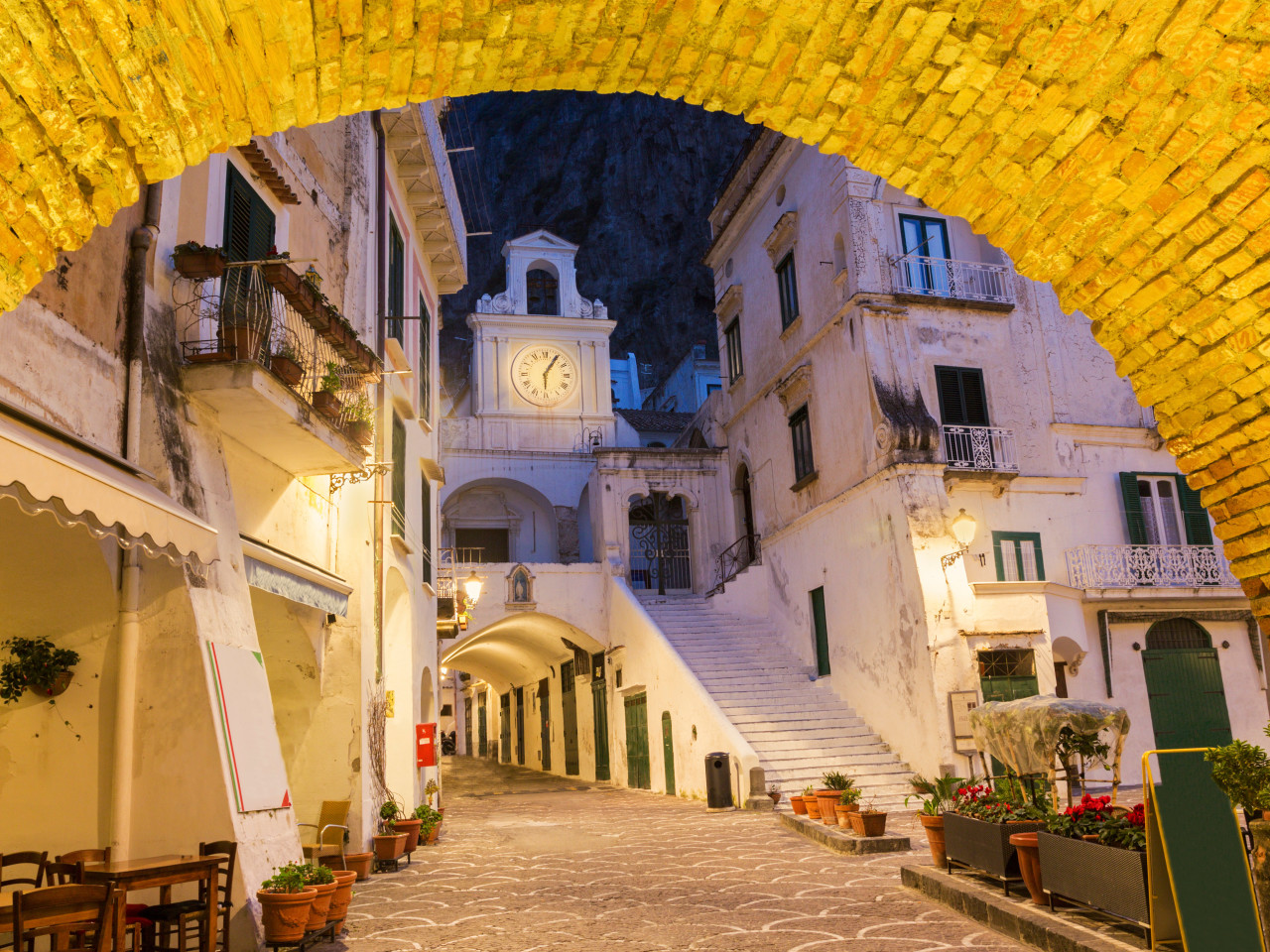
Right next to Amalfi, on the coast, lies the tiny municipality of Atrani: with an area of 0.1206 km², it is, in fact, Italy’s smallest municipality. Atrani is nestled between Mount Civita to the east and Mount Aureo to the west: these two hills form a “cave” (antro), from which the town’s name is said to derive. Its layout is quite unique: houses, alleyways, arches, and stairways radiate out from the main square and the beach. Despite its small size, the village still retains a strong sense of identity and truly fascinating architecture: many cultural events are held here, and there’s no shortage of historical and artistic attractions—quite the opposite! Discover them all at this link.
8. Ravello: the town perched above the Coast, beloved by Wagner
Ravello is one of the coastal villages nestled in the hills. Its elevated position is precisely what makes it home to some of Campania’s most breathtaking viewpoints: in particular, from the Cimbrone and Rufolo villas, you can admire some of the Coast’s most iconic views. This feature has contributed to the town’s fame, which has long attracted artists, writers, and musicians. In particular, the world-renowned composer Richard Wagner had a unique connection to the town: it is said that the atmosphere and gardens of Villa Rufolo inspired him to create the setting for Klingsor’s garden in his opera “Parsifal.” This story has become an important part of Ravello’s culture and, above all, has strengthened the bond between the town and music: even today, Ravello is known as the “city of music” and hosts an annual classical music festival that is deeply loved by the public.

9. Positano hasn't always been such a... glamorous place!
Today, the village of Positano is inextricably linked with luxury, elegance, and exclusivity, and it’s a highly popular destination for international tourists. Its history, however, tells a very different story: Positano actually began as a community centered on fishing, agriculture, and maritime activities. Its transformation into an international tourist destination occurred gradually, especially over the course of the last century, when artists, writers, and celebrities began to frequent it regularly. What today appears to be an elite and exclusive place still retains traces of a past linked to much more humble and modest ways of life.

10. Coastal towers as a defensive system
When you visit the Amalfi Coast, you’ll often notice towers—whether intact or in ruins—perched on promontories along the beaches. But why are there so many of them? You should know that in the past, especially during the Middle Ages, every village had to defend its borders against potential external attacks. The main threat, of course, came from the sea: raids by Saracen raiders and pirates were very common, which made it necessary to build defensive outposts from which to monitor the surrounding territory and sound the alarm for the village’s inhabitants. That’s why, on the beaches of some villages—such as Maiori and Cetara—you can still spot these defensive towers, which have become characteristic features of the landscape; at the same time, their presence still serves as a reminder of an era when living near the sea meant being exposed to conflicts and raids.

One region, countless stories
Here I’ve listed some of the most bizarre facts about the Amalfi Coast, but what do these anecdotes really tell us? We can conclude that perhaps the most significant fact about the Amalfi Coast is this: behind a relatively small area lies a surprising wealth of stories. For this reason, the region deserves to be explored and understood more deeply: only then can you discover what each village has to offer and get to know the people who live there, their traditions, and the events that have shaped them into who they are today.
- Are you a history buff? Discover Amalfi’s past at the Antico Arsenale della Repubblica, which also houses the Compass Museum. Find more information at this link.
- Are you a fan of lemon drinks? Check them all out in this article!
- Although small, the village of Furore is well worth a visit. Here are the must-see destinations.
- Want to learn more about the Cimbrone and Rufolo Villas in Ravello? Read this article.
more info
share this article


Travelmar Ferries
Discover the Amalfi Coast from the sea: more views, less traffic.
Daily Ferry Tours
Visit Amalfi, Positano and other destinations in just one day.

Reach your destination on comfortable buses with reserved seats.
latest articles

TRAVEL AMALFI COAST
privacy & cookies | p.iva 07294870634 | Travel Amalfi Coast by Tra.Vel.Mar SRL. All right reserved