CAPRI: THE GEM OF THE GULF OF NAPLES
One of the most iconic places in the Mediterranean, the island of Capri is much more than just a tourist destination: elegant yet wild, sophisticated yet authentic, its thousand-year history and beauty have enchanted travelers, artists, and celebrities for centuries. Discover it with us!
by R. Cascone
Capri is an island in the Campanian archipelago in the Gulf of Naples, located opposite the Sorrentine Peninsula. Accessible all year round by ferry or hydrofoil from Naples, Sorrento, Castellammare di Stabia, and the Amalfi Coast, it is one of the most popular tourist destinations for Italians and foreigners alike. But why? Read the article to satisfy all your curiosity about Italy's most glamorous island!
share this article
Capri's harbor
History of the name and place
The origins of Capri date back to ancient times, of which the island still preserves numerous traces, making it even more interesting and fascinating. The name derives from the Latin Capreae and the Greek Καπρέαι, which suggests that the island was named after the abundance of goats (capra in Latin) or wild boars (κάπρος in Greek). The Greek historian Strabo rightly believed that Capri was once connected to the mainland: this theory was later confirmed due to the geological similarities it shares with the Sorrentine Peninsula.
The Greek colonization of the island is shrouded in mystery and legend: it is said that the island was linked to the cult of the sirens, mythological creatures that were half bird and half woman, but the first historical evidence dates back to the 7th century BC, when, according to the historian Livy, the Greeks initially settled on the island of Ischia and only later on Capri.
In Roman times, the island enjoyed great prosperity when Caesar Octavian, the future emperor Augustus, and his successor Tiberius decided to make Capri their favorite place to stay in the Mediterranean. It was Tiberius who built the port of Marina Grande and the enormous Villa Jovis, his imperial residence on the island, which was rediscovered during the Bourbon era and can still be visited today.

Natural and cultural wonders not to be missed
The island is home to two municipalities: Capri and Anacapri. While the former is located on the coast and is the more touristy and fashionable part, the latter is located in the hills and is the quieter and more authentic part of the island. Although different, both have many attractions to offer!
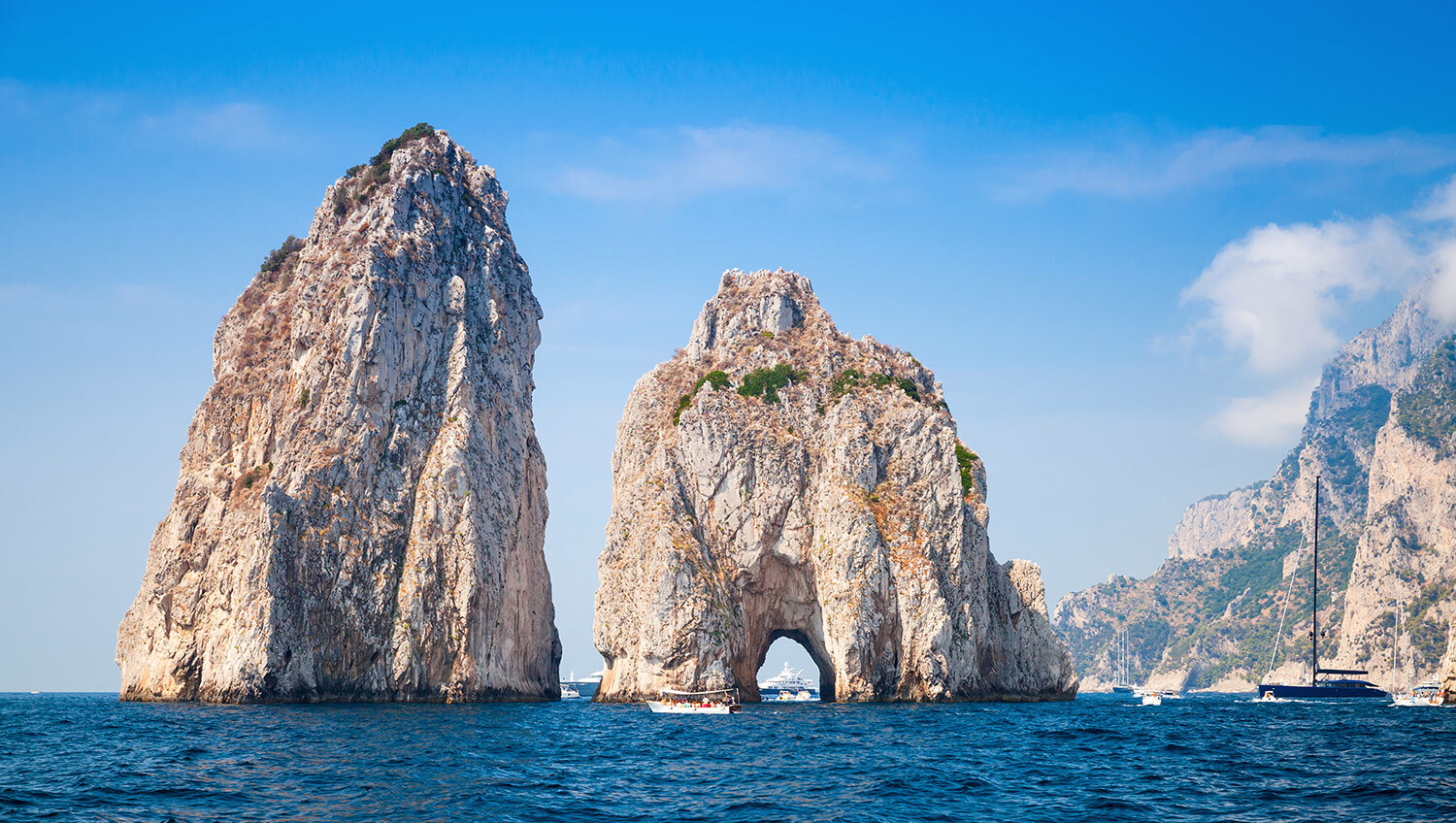
You have surely heard of or seen images of the Faraglioni: the natural symbol of the island, these are three karst rock formations that are visible from both the sea and land and have become famous over the centuries, immortalized in paintings as early as the 19th century and later in numerous films. In addition to the Faraglioni, another natural wonder that Capri carefully preserves is the Blue Grotto, a karst cave submerged by the sea into which the reflection of external light creeps, creating an intense shade of blue that is the cave's distinctive feature.
Still from a naturalistic point of view, Monte Solaro is the highest peak on the island at 589 meters. The mountain can be reached by chairlift, from which you can enjoy an incredible view and a panorama of infinite beauty over the sea surrounding the island and the Faraglioni. An essential stop on any trip to Capri!
Other places of social and cultural interest include the famous Piazzetta: the social heart of Capri, where you can enjoy a coffee and experience everyday life on the island. The Gardens of Augustus and Via Krupp are another must-see destination: a veritable botanical garden home to examples of the island's flora, from which you can admire other magnificent views of the landscape. In addition, history and archaeology enthusiasts should not miss Villa Jovis. The villa was commissioned by the Roman emperor Tiberius and covers 7,000 square meters. It was rediscovered during the Bourbon era and then studied and restored by the famous archaeologist Amedeo Maiuri. It is a place where you can immerse yourself in a past of luxury and power!
Finally, Villa San Michele in Anacapri is also worth a visit: purchased by Swedish doctor Axel Munthe, it was restored and only after his death did it become a museum. Today it is one of the most popular tourist sites on the island, from which you can admire the whole island, stroll through meticulously tended gardens, and even see some incredibly crafted archaeological finds.


Some travel tips
The ideal times to visit the island of Capri are definitely spring and fall: the mild temperatures will allow you to enjoy nature and even go to the beach, all without having to elbow your way through the large crowds of tourists that characterize the summer months. Once here, enjoy the traditional local cuisine: ravioli and caprese salad are a must, but don't forget to try the famous caprese cake dessert!
Finally, try to soak up the atmosphere here: there's a reason why the island has always attracted artists, writers, and international stars! With its landscapes of infinite beauty, the scent of lemons and local cuisine, the mild Mediterranean climate, and the incredibly blue sea... Capri will captivate you, body and soul!
And you'll discover that you'll never want to leave.
share this article
- To visit Villa Jovis, you can find all the necessary information at this link.
- Would you like to visit Villa San Michele? Click here to learn more.
- For more information or to purchase tickets for the Gardens of Augustus, visit this link.
some tips
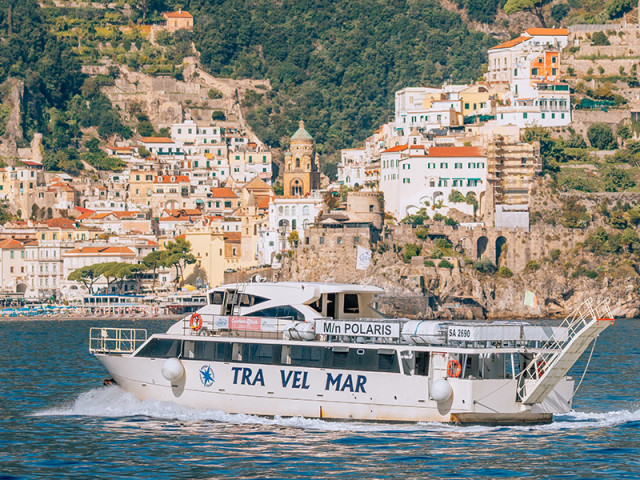
Travelmar Ferries
Discover the Amalfi Coast from the sea: more views, less traffic.
Daily Ferry Tours
Visit Amalfi, Positano and other destinations in just one day.

Reach your destination on comfortable buses with reserved seats.
latest articles
TRAVEL AMALFI COAST
privacy & cookies | p.iva 07294870634 | Travel Amalfi Coast by Tra.Vel.Mar SRL. All right reserved